Looking Back to Look Ahead: Reflections on People, Pressure and Purpose via In.Comms
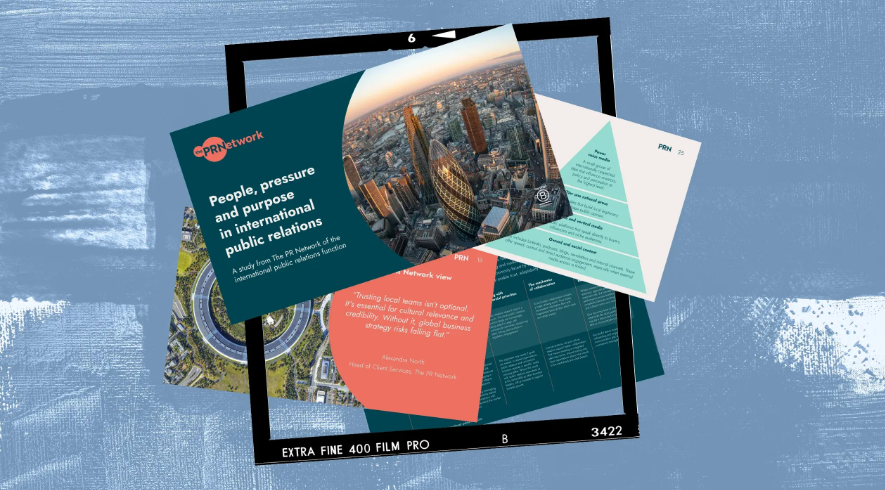
In September 2025, we launched People, Pressure and Purpose — a deep dive into what’s really going on inside international communications functions today. Developed in collaboration with industry veteran Stephen Waddington, the report explored the models, mindsets and pressure points shaping global PR leadership through conversations with 25 senior comms professionals.
A few months on, we head into 2026 with fresh challenges, new market shifts — and many of the same structural tensions. Which is why the In.Comms article on our report, published late last year, is well worth revisiting.
Their piece distils the heart of the report — capturing the complexity of leading global PR teams at scale, while reflecting on the enduring challenges of clarity, control, collaboration and culture.
Five pillars of global PR that still hold strong
In.Comms pulled out five consistent success factors that continue to underpin high-performing international comms functions:
Trust as the foundation — not just between brands and audiences, but across internal teams
Empowered local teams who adapt and own messaging within clear frameworks
Alignment with commercial goals, not just communications KPIs
Structured collaboration that allows for nuance, not one-size-fits-all rollouts
Proactive agency management that prioritises support, not just oversight
None of this is revolutionary — but it is often overlooked in the rush to scale fast and ‘go global’. These are the fundamentals of doing international PR well — and they remain just as relevant in 2026 as they were in 2025.
One model won’t fit all
Another important takeaway was around organisational design. The report identified four common operating models for global comms teams: centralised, regional (hub-and-spoke), best-in-class networks, and hybrid setups.
The In.Comms piece rightly points out that no one model is “the answer”. What matters is intentionality: understanding which elements should be globally led, and where local flexibility adds real business value.
As we see global teams continue to evolve in 2026 — especially under economic and technological pressure — this insight is worth holding on to.
The pressure is real — and growing
One of the reasons we commissioned People, Pressure and Purpose in the first place was to shed light on the real strain leaders are under behind the scenes. The article summarises three key concerns that remain front of mind:
Strategic contribution vs strategic recognition — Comms leaders are closer than ever to the heart of business strategy, but are still battling for formal influence and investment.
Wellbeing and role design — The demands of 24/7, always-on roles across time zones are unsustainable without structural change.
Skills for the future — From AI and data to integrated storytelling, the capabilities required are shifting fast — and many teams are underprepared.
These pressures aren’t going away in 2026. But by talking about them openly — as this article does — we can better support the people and structures that power international communications.
Looking ahead
We’re proud that People, Pressure and Purpose continues to generate meaningful conversation months after its release. The In.Comms article doesn’t just recap the report — it adds reflection, context and timely reminders of what great international PR leadership looks like.
And if you’d like to read the full report, you can download it here.